LANCING · PACKAGING MACHINERY & AUTOMATION
Bottle and dose

Bottle filling machines that start with your container

Select bottle filling around neck access, fill quantity, product behaviour and stable handling.

LANCING / bottlefillingmachine.co.uk
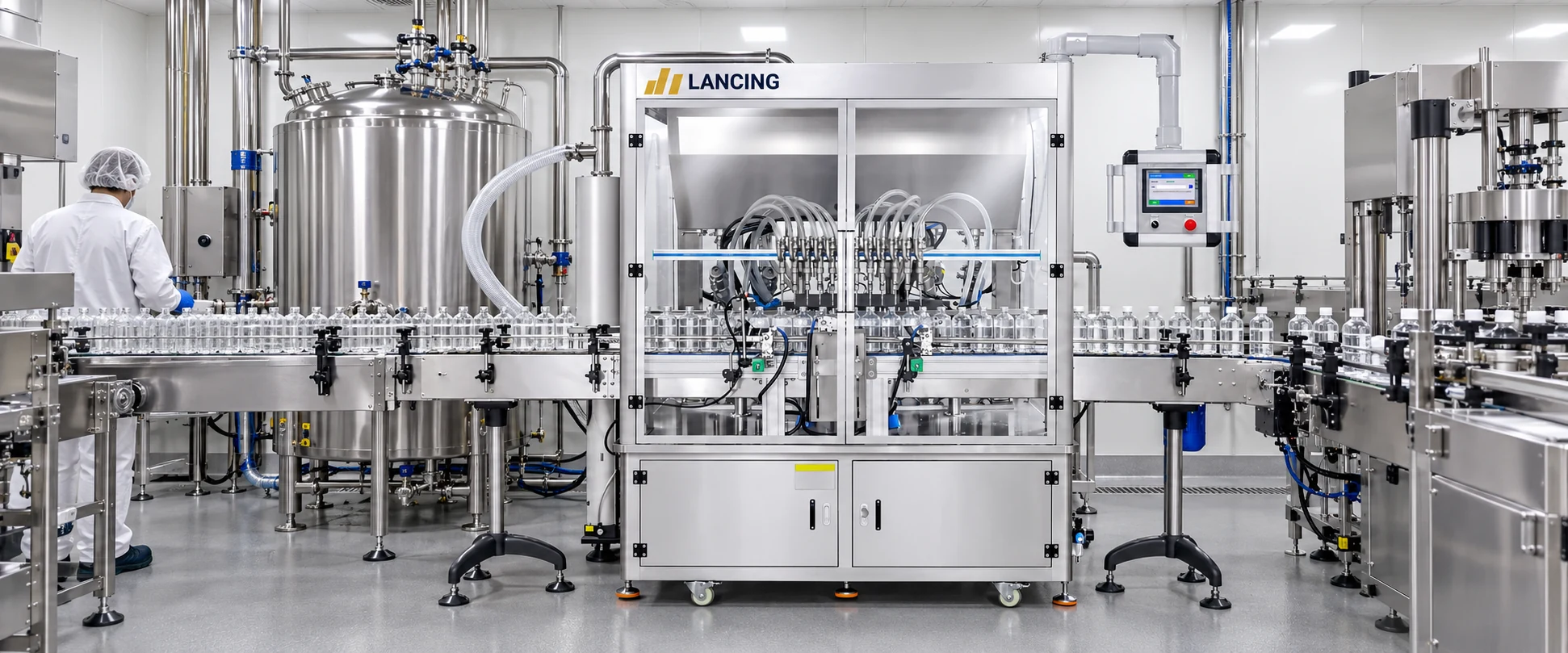
Representative Lancing filling production imageryApplication focus / Filling
Built around
your production.
Product. Pack. Output.
Start with your application.

Representative Lancing production imagery. Final machinery and configuration depend on your application.

01Bottle samples and neck dimensions
02Product and fill range
03Output and bottle feeding method
Bottle filling

A clearer route to the right equipment.

The bottle is an active part of a filling application. Its opening, height, shape and stability influence nozzle access and handling; its contents influence dosing and shut-off. A clear brief combines these details with the intended output. Compare machines using your actual container set and product condition, including what happens to the bottle immediately after the dose.

Explore the relevant Lancing catalogue
Application planning

bottle filling machine: where to start.

Explore the production situations that shape the specification. These examples describe requirements to discuss, rather than confirmed machine configurations.

Narrow-neck containers

A restricted opening influences nozzle access and how liquid enters the bottle. Supply the actual container and product details, including foaming or dripping, so dosing and the condition of the sealing surface can be reviewed together.

Shaped or lightweight bottles

A tall, flexible or unusually shaped pack can need particular support or guidance during filling. Describe empty and filled handling and show how the bottle is presented, held and transferred towards closure application.

Several bottle formats

A defined family of containers can be assessed for adjustment and change parts. Include the shortest, tallest and least stable formats with their corresponding fills rather than presenting only the most common bottle in the range.

Read the bottle filling machine application guide
Compare the approach

Start with the way you work.

Use these routes to frame the discussion. Lancing will confirm the proposed machine, handling method and scope against your product and packaging.

OPTION / 01

Hand-presented bottle filling

An operator positions the bottle for a controlled dose. This keeps container handling flexible, while bottle support and a clear operating routine help define the proposed workstation.

Consider whenShort runs and varied bottle formats.

OPTION / 02

Indexed automatic filling

Bottles are presented through a controlled handling sequence for dosing. Guides, spacing and nozzle positioning should be reviewed against the full bottle range and downstream discharge conditions.

Consider whenRepeat production requiring coordinated bottle presentation.

OPTION / 03

Multi-format filling project

A machine can be assessed for an agreed set of bottle sizes and products. Specify change parts, adjustment points and cleaning requirements for the range rather than assuming unlimited flexibility.

Consider whenManufacturers running several defined container families.

Specify what matters

Small details.
Better decisions.

Start with the constraints that affect your application. Our selection guide helps you organise a useful machinery brief.

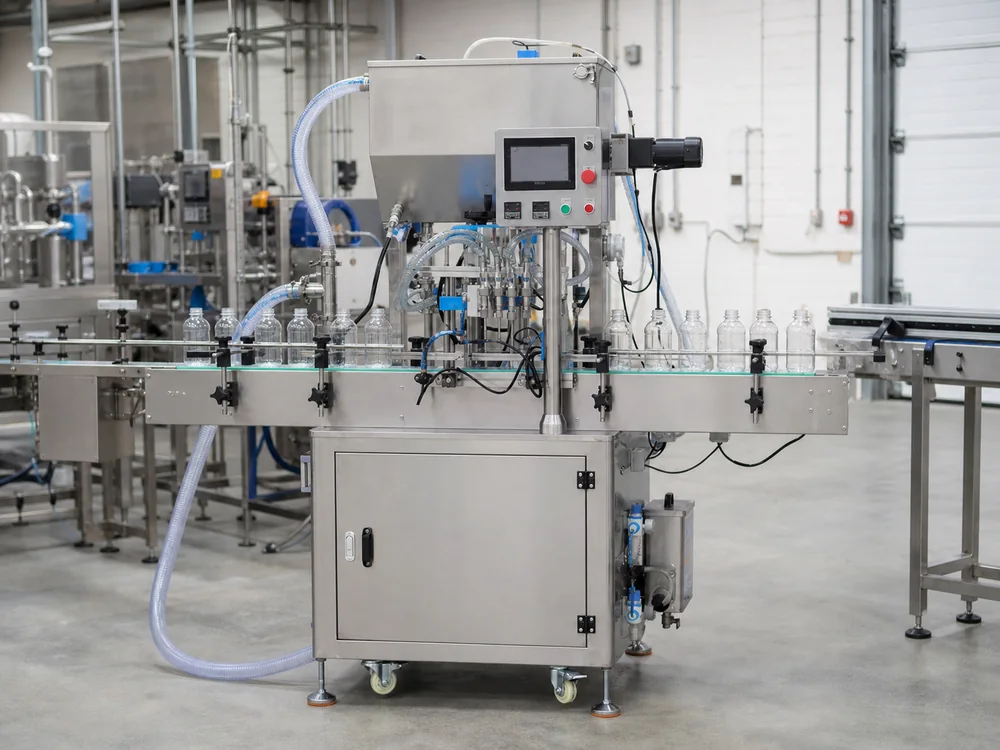
Representative Lancing equipment in a production settingRead the selection guide
  1. 01

    Neck and nozzle access

    Provide the neck opening, height and any shoulders that restrict access.

  2. 02

    Dose and product condition

    Describe fill quantity, temperature, viscosity and particles, with the smallest and largest required doses.

  3. 03

    Bottle movement

    Explain how empty bottles arrive and filled bottles leave.

The application process

Define it. Review it.
Agree the scope.

A practical starting point for your enquiry, with the actual specification confirmed before an equipment decision.

STEP / 01

Build a bottle set

Supply samples or drawings of each format, with the corresponding product, fill quantity and daily production pattern.

STEP / 02

Review dosing and presentation

Assess access, fill behaviour, bottle stability and the condition of the neck using the proposed filling method.

STEP / 03

Confirm the finished-bottle checks

Agree how accepted fill, neck cleanliness and transfer to closing will be assessed within the quoted operating range.

Before you enquire

Your questions,
considered.

Practical answers to help you prepare a more useful discussion.

Can different bottle heights share one filler?

A defined height range may be possible, depending on nozzle adjustment, bottle guidance and guarding. Include the extremes and any unusual neck geometry in the enquiry.

Why supply an empty bottle sample?

It allows review of opening access, rigidity, guides and handling. Drawings are useful, but samples can reveal features and tolerances that affect the proposed setup.

Is a consistent level the same as accurate volume?

No. Internal bottle variation can affect the relationship between volume and visible level. State which characteristic matters and how the finished fill will be checked.

Can filling and capping be discussed together?

Yes. The handover between them matters, including neck cleanliness, spacing and closure presentation. Provide the complete bottle and closure assembly for a combined review.

From requirement to recommendation

Let’s define the right next step.

Tell Lancing what you need to handle, pack or produce. Start with the details you know; use the application brief to organise the rest.